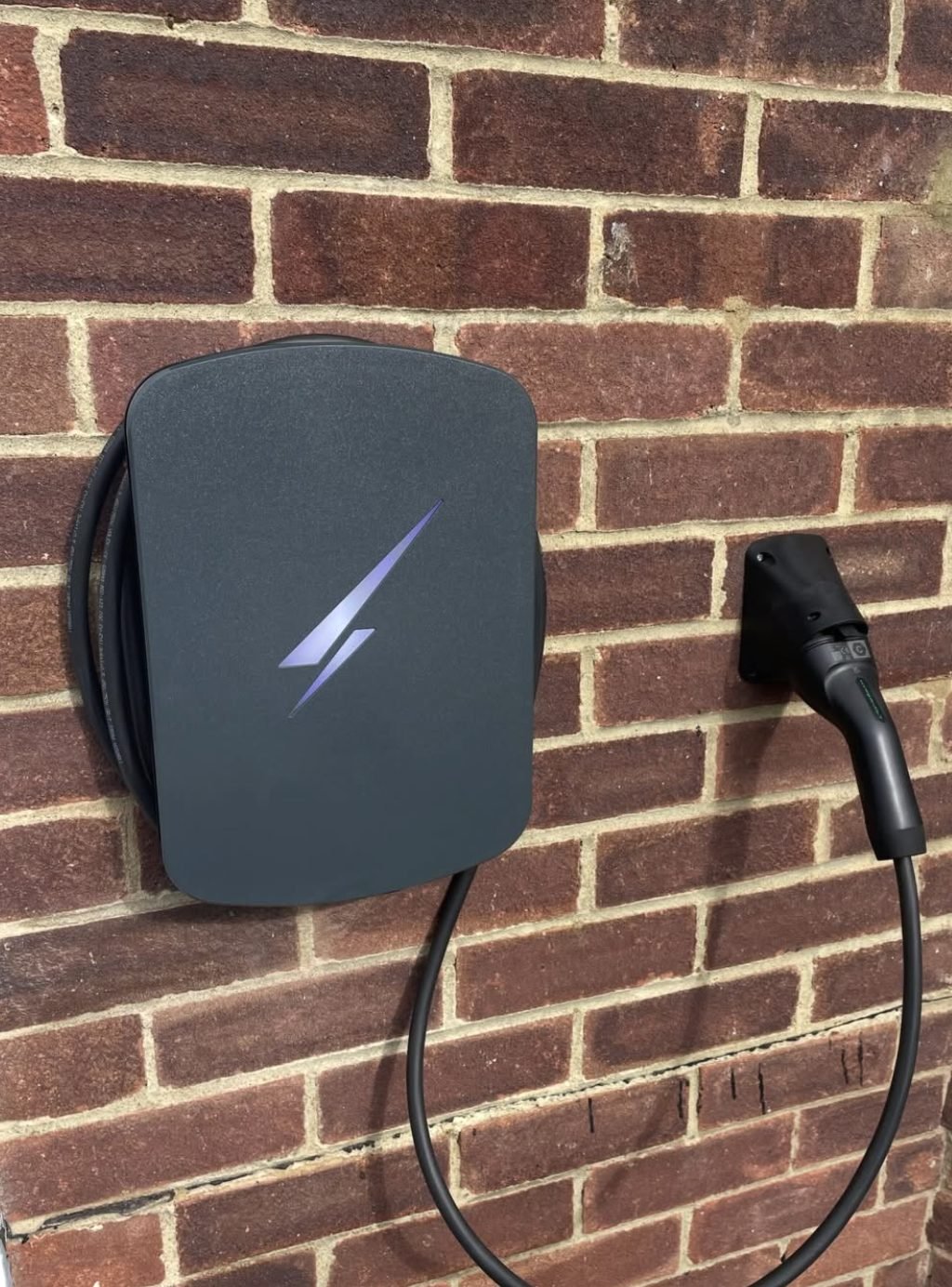
Home charge points
EV Charger
Installation
Durham
Supply checked before anything is promised, a circuit of its own out to the unit, and the charger positioned where the lead actually reaches the car.
The bit most people skip
Almost every charge point that goes wrong at the quoting stage goes wrong for the same reason: nobody looked at the incoming supply first. What the service head and tails will carry decides whether a 7kW unit is straightforward, whether load management is needed, or whether the answer is a conversation with the network operator before anything gets ordered.
That check takes minutes and it is the first thing we do. It is also why we would rather look at the property than price a charge point over the phone from a postcode, because the two houses either side of you can easily need different answers.
Where the unit actually goes
The second thing people underestimate is positioning. A charger mounted wherever the cable run was easiest for the installer is a charger you will resent every day for ten years. Where does the car sit? Which side is its socket on? Do you reverse onto the drive or nose in? Does the lead end up crossing a step, a border or a path where somebody walks?
We will walk it with you before drilling anything. Tethered units suit people who park the same way every time and want to plug in without fetching a cable. Untethered suits shared drives, tighter frontages and anyone who wants the flexibility later. Neither is automatically right.
Durham-specific awkwardness
Terraced streets in the city with no off-street parking are the hard case, and we will be straight with you: running a lead across a public footpath creates a trip hazard and we will not sign that off. If you have a drive, a hardstanding, a rear yard with vehicle access or a shared court with an agreement in place, it can almost always be made to work.
Out in the villages the issues are different — longer runs to detached garages, solid stone walls between the board and the parking, and occasionally a supply that needs assessing properly before a 7kW load goes on it. All solvable, all cheaper to establish before you have bought a unit than after.
What the installation includes
- Assessment of the incoming supply and existing board
- A dedicated circuit back to the consumer unit
- Correct protective device and RCD type for the unit
- Cable routed and clipped to stay discreet
- Core drilling through solid and cavity walls
- Weatherproof mounting at a sensible height
- Full testing, commissioning and app pairing
- Notification and certification on completion
How it runs
What actually happens
Survey
We look at the supply, the board, the parking and the route. You get a clear answer on what is possible and what it will cost before anything is ordered.
Agree the position
Walked and marked with you on site. Where the car sits decides where the unit goes, not where the cable run happens to be easiest.
Install
Dedicated circuit run, wall cored, unit mounted and the cable route kept as tight and tidy as the building allows.
Test and hand over
Commissioned, tested, paired to the app if it has one, and the paperwork issued. We will show you how it behaves before we leave.
Recent projects
Work of this kind
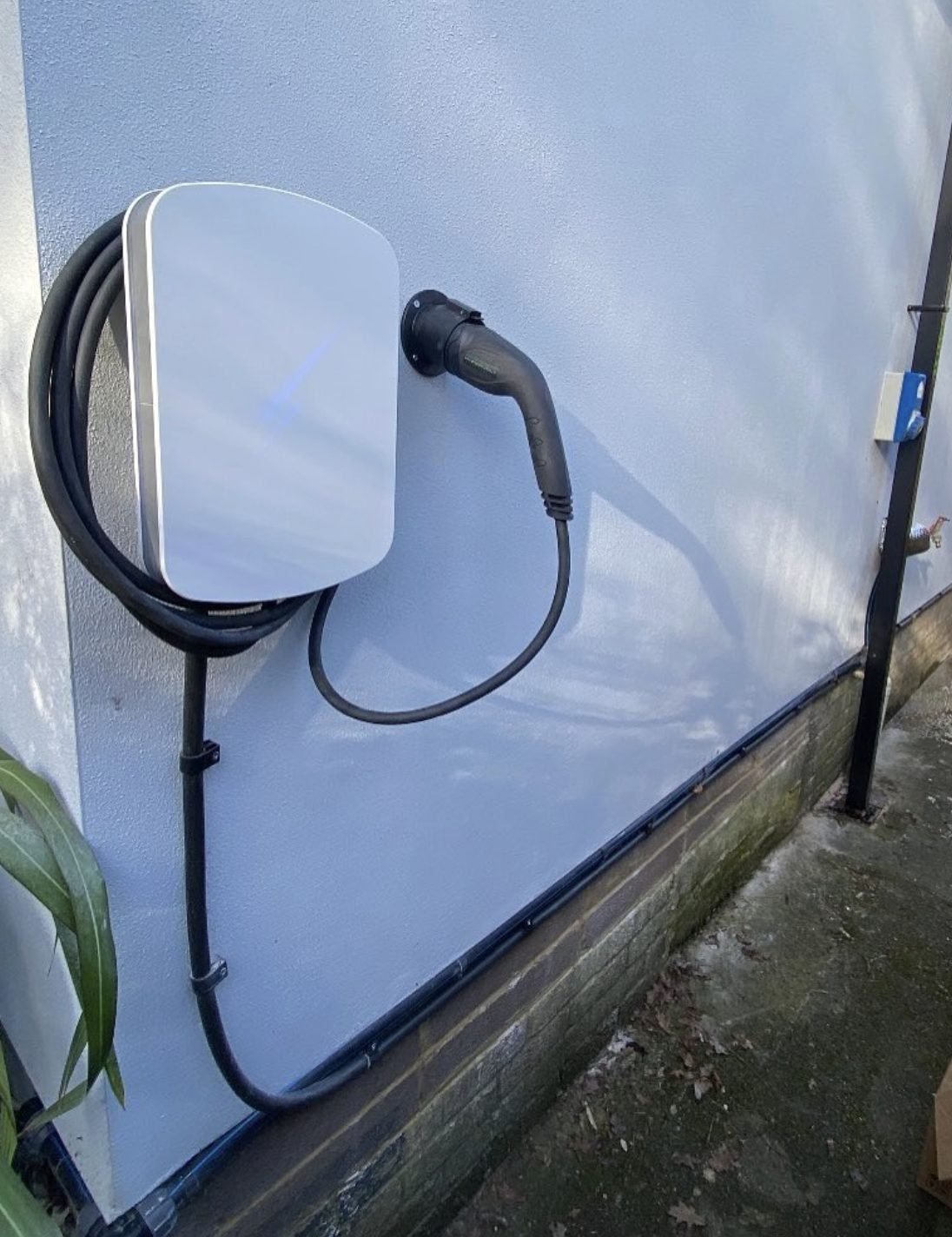
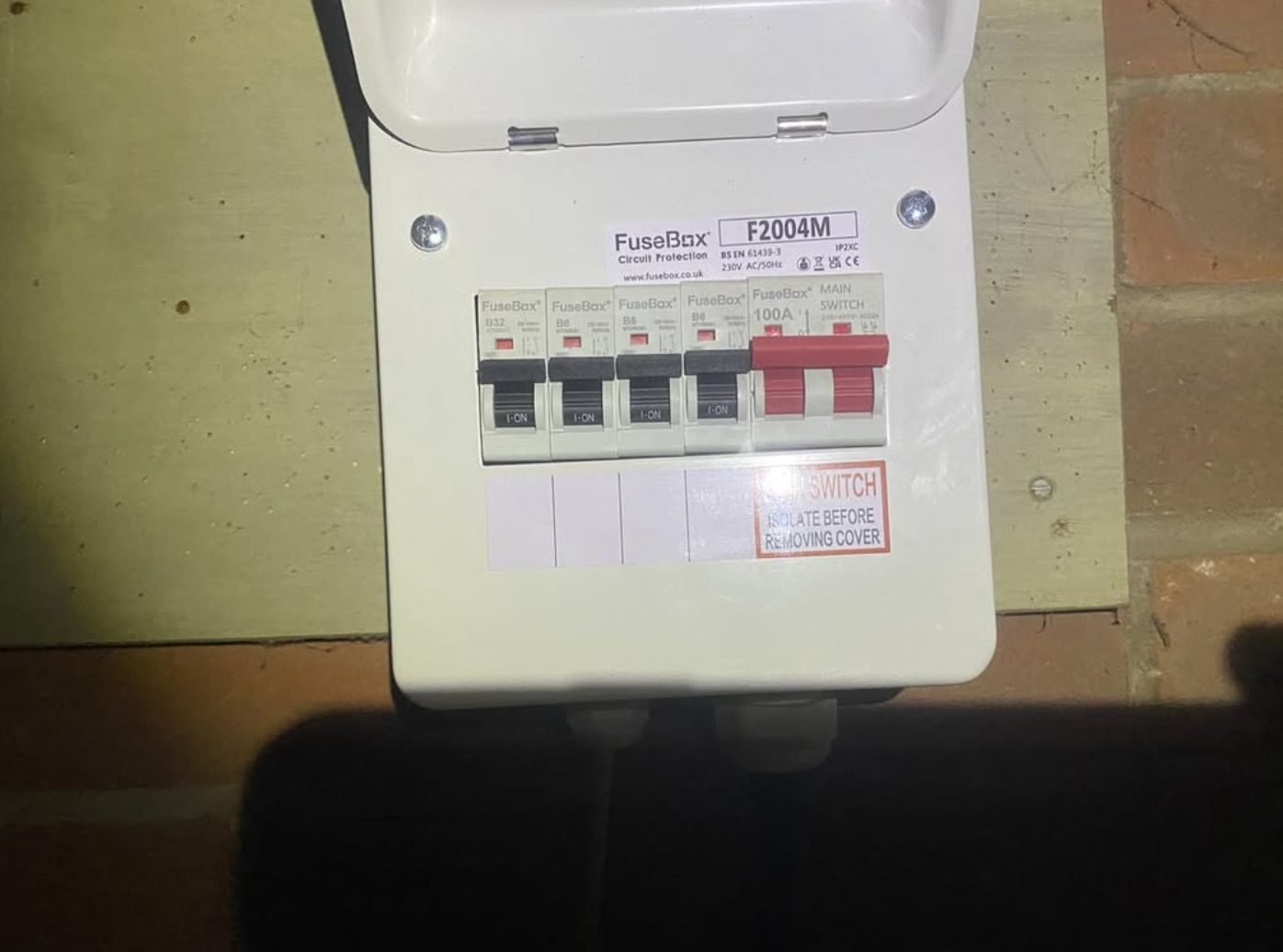
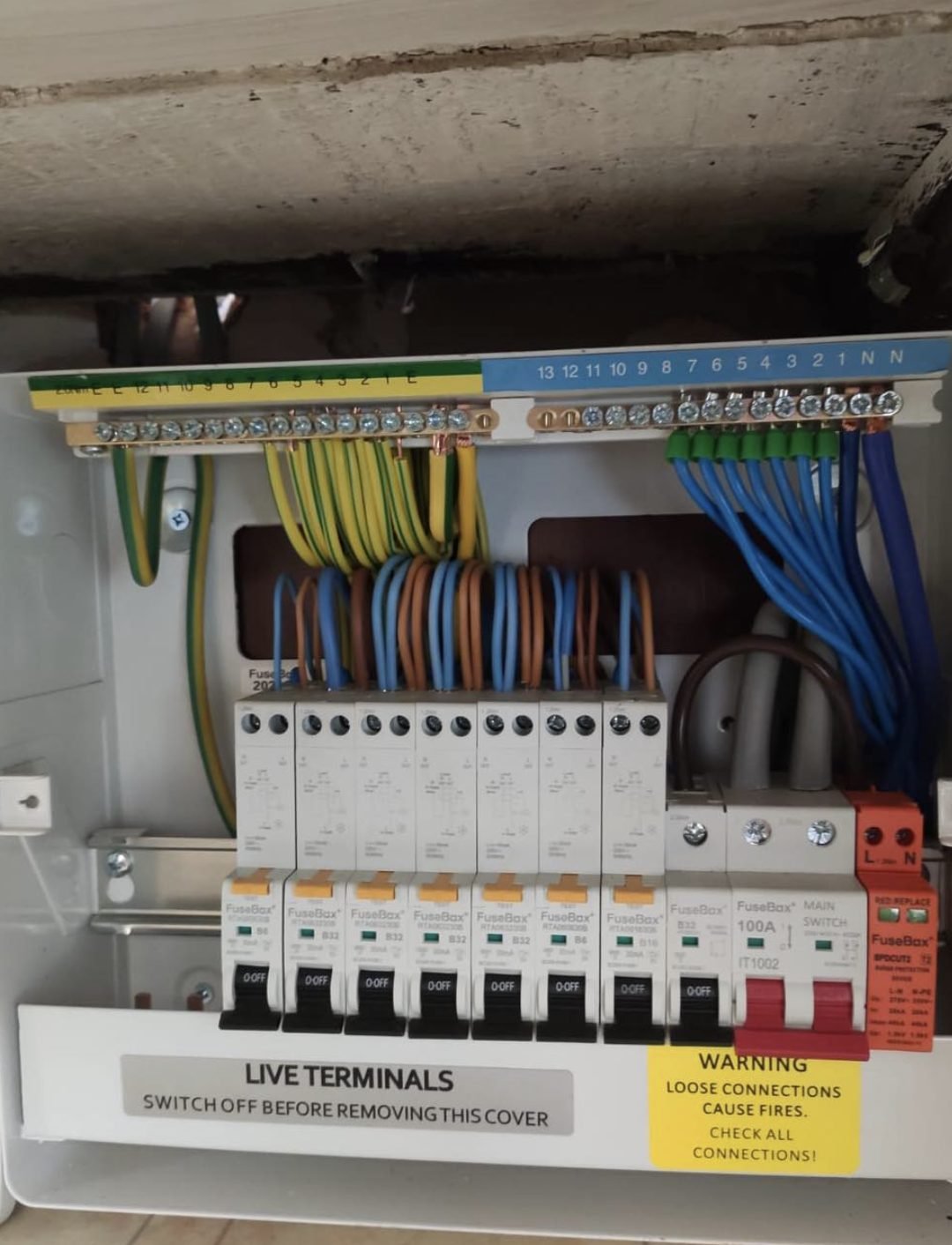
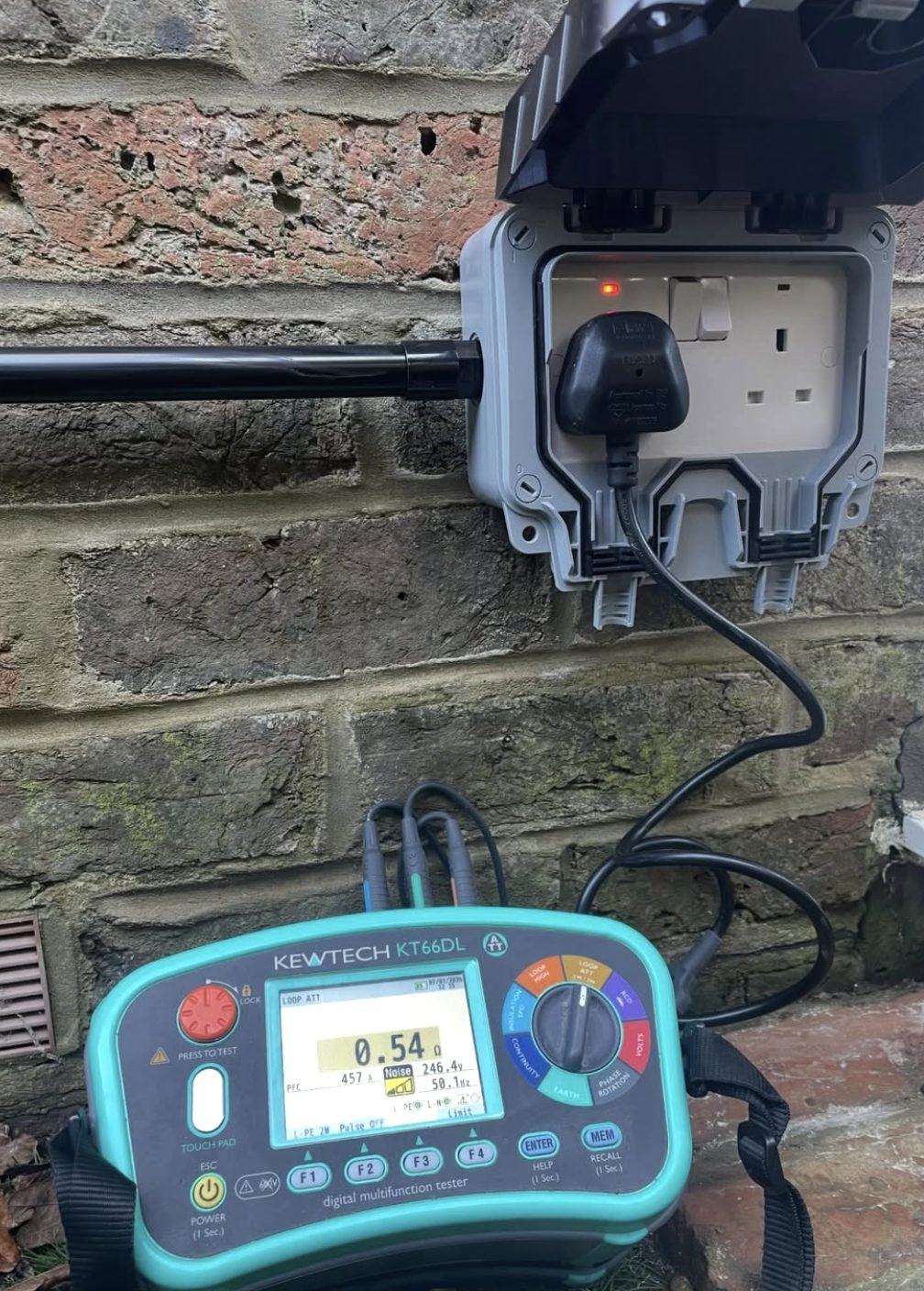
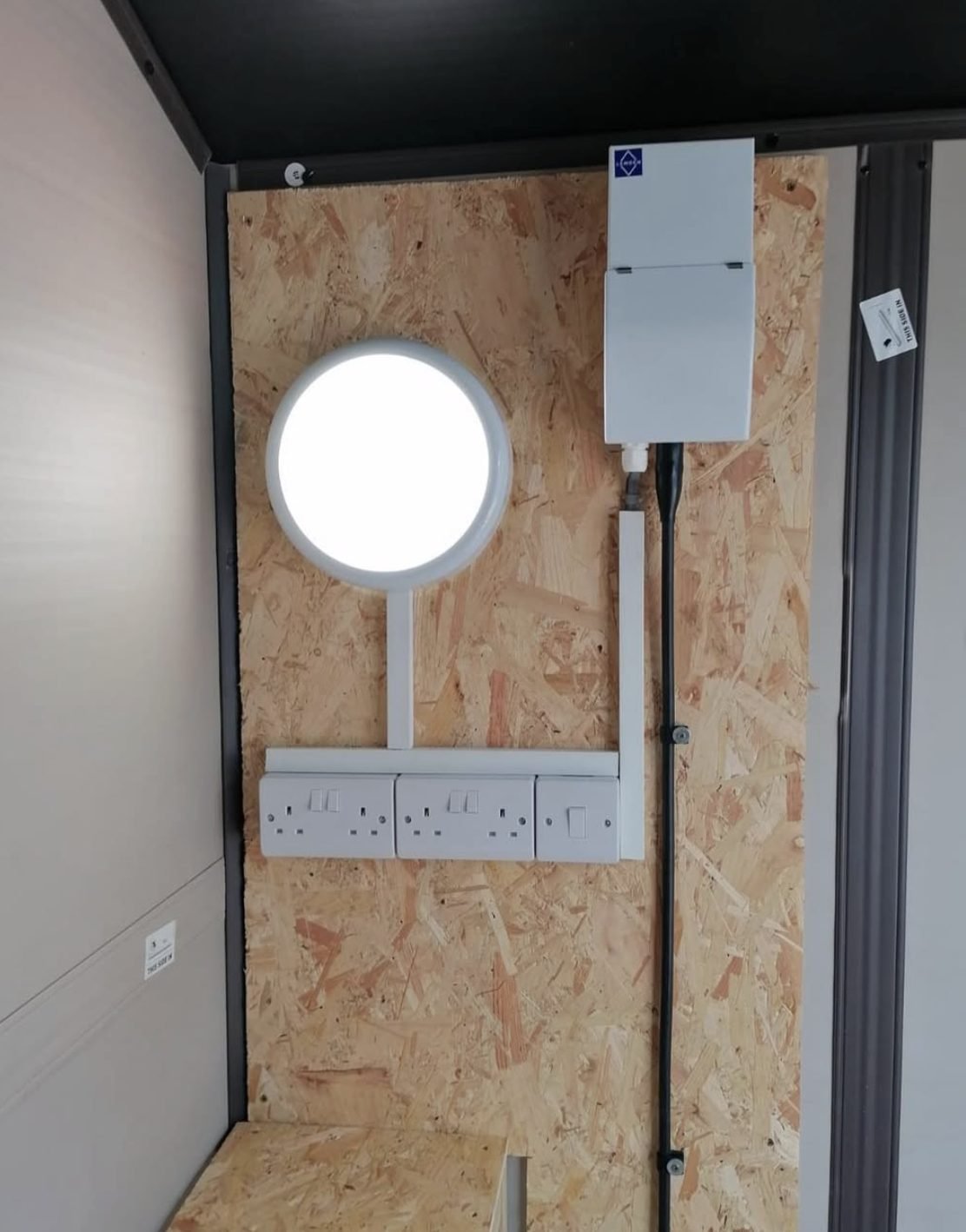
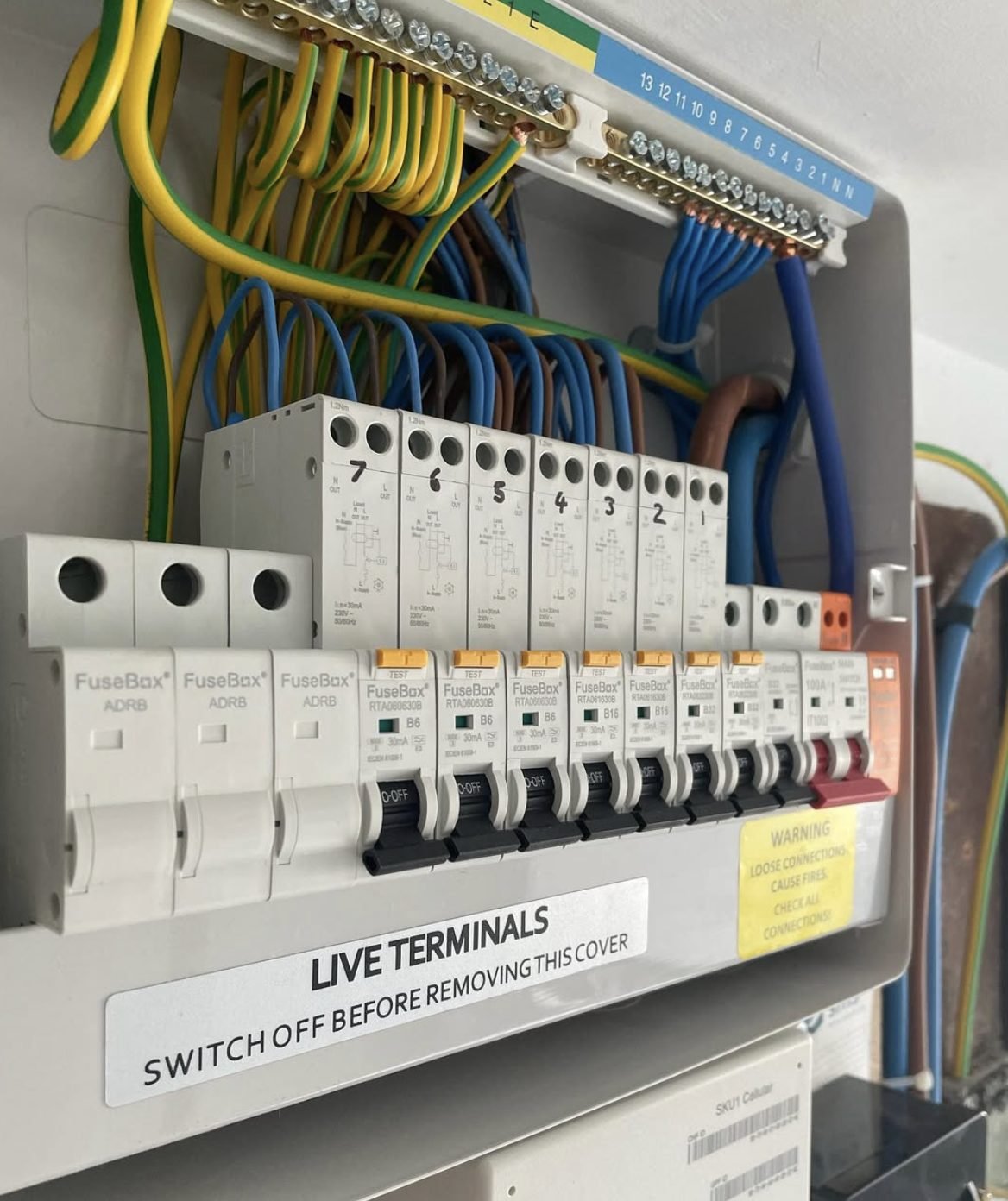
Photographed on site as each one finished.
FAQs
Questions on this specifically
Can I have a charger without a driveway?
Honestly, usually not in a way we would be willing to certify. Trailing a lead across a public footpath is a trip hazard and most councils will not permit it. A drive, hardstanding, rear yard with vehicle access or a shared court with an agreement all work. Describe your parking on the phone and we will give you a straight answer rather than a maybe.
Do you fit a unit I have already bought?
Yes, provided it is a compliant unit intended for the UK market. If you have not bought yet, it is worth a five-minute conversation first — tethered versus untethered, and whether the features you are paying for actually matter for how you charge.
Will my supply take a charger?
Most domestic supplies will, but it needs checking rather than assuming, particularly where there is already an electric shower, an induction hob and a heat pump on the same service. Where the headroom is tight, load management built into the charger is often the answer and avoids an expensive supply upgrade.
How long does it take?
A straightforward install is usually most of a day. Longer cable runs, solid stone walls, detached garages or anything needing board work can push it beyond that. You will be told which you have got at the survey, not on the morning.
What about a charger at a rental or a business?
Both are fine. Rented property needs the owner's agreement and is worth pairing with an inspection while we are there. For business premises there are extra questions about who charges, how usage is recorded and whether units need to be networked, and we will talk those through before quoting.
Also worth a look
Other things we do
Get in touch
Get a price for this
Phone if it is urgent. Otherwise fill this in with as much detail as you can and we will come back with a figure or a date.
Call the team0191 934 0118- CoveringDurham City and the county around it — Chester-le-Street, Consett, Stanley, Lanchester, Bowburn, Coxhoe, Peterlee, Easington, Seaham and the villages between.
- HomesCity terraces, colliery-village housing, inter-war semis and rural property. Nothing too small, nothing too big.
- Student letsEICRs, HMO certification and remedial work, scheduled around term dates and changeover weeks.
- UrgentUse the phone for anything that cannot wait. We can set off and talk you through isolating it at the same time.
Send the details
The more you put here, the tighter the figure we can come back with.
Electrician Done Right
Thinking about a charge point?
A short survey tells you what your supply will take, where the unit should go and what it will actually cost.